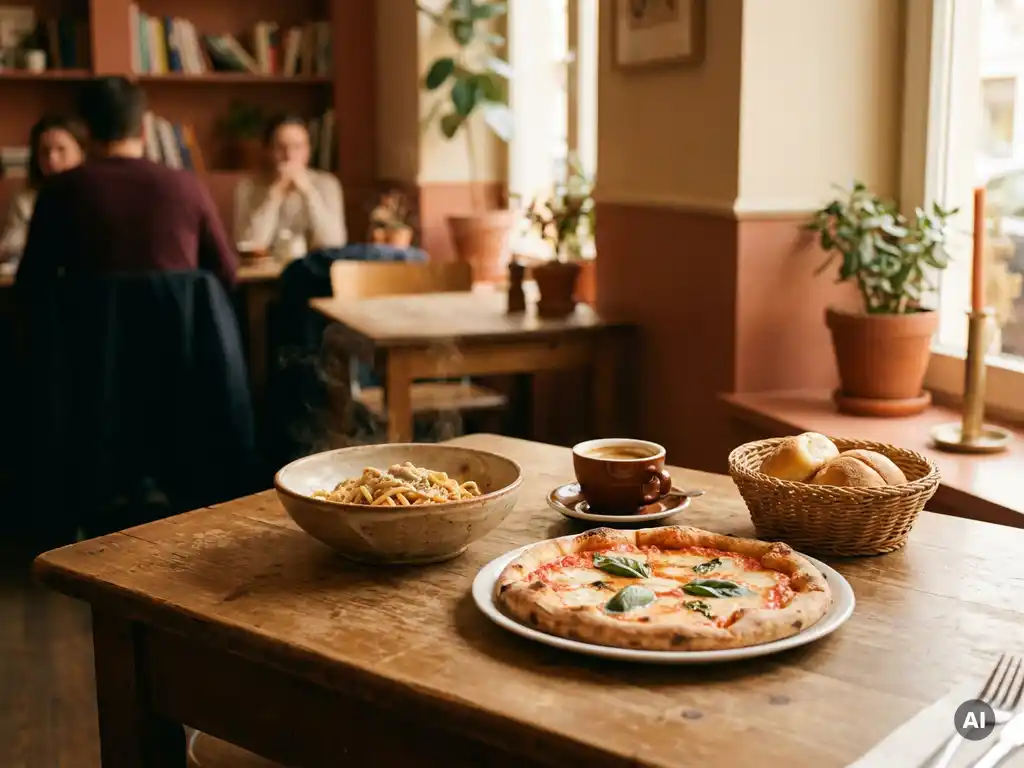
At most cafés, pasta is the better order. Cafés typically handle pasta more reliably than pizza because pasta requires minimal specialist equipment (no pizza oven, no dough expertise), making it easier to execute well in a café kitchen. Pizza at a café is a gamble that rarely pays off, while a well-made pasta dish can be genuinely excellent. The sections below break down exactly when each dish makes sense and how to judge what’s worth ordering.
Which dish is typically better quality at a café, pasta or pizza?
Pasta is almost always the better-quality option at a café. A café kitchen can produce a respectable pasta dish using a stockpot, a good sauce, and fresh or dried noodles. Pizza, by contrast, demands a high-temperature oven and practiced dough handling to achieve the crust and char that make it worthwhile. Without those, café pizza tends to be soft, pale, and underwhelming.
This does not mean café pasta is always outstanding, but the gap between a mediocre pasta and a mediocre pizza is significant. A simple aglio e olio or a tomato-based penne can be satisfying even when made without fanfare. A pizza baked at the wrong temperature in a conventional oven rarely satisfies anyone who has eaten a proper slice. When you are weighing café lunch options, pasta carries a much higher floor of quality.
There are exceptions: some cafés invest in countertop pizza ovens or source their bases from a specialist supplier, but these are the minority. Unless the café specifically advertises its pizza or you have seen evidence of quality firsthand, pasta is the safer, more consistently rewarding choice.
What makes a café different from a pizzeria or Italian restaurant?
A café is a hospitality venue centered on beverages (coffee, tea, and light drinks), with food playing a supporting role. A pizzeria or Italian restaurant is built around food production as its primary purpose, with kitchens, equipment, and staff trained specifically for that cuisine. This structural difference is the single most important factor when comparing food quality across these venues.
In practical terms, a café kitchen is typically compact and multi-purpose. It is designed to produce a range of dishes quickly and with limited equipment, not to specialize in any one culinary tradition. A pizzeria, by contrast, centers its entire operation on the pizza (the oven temperature, the dough fermentation time, the ingredient sourcing) in a way that a café simply cannot replicate as a secondary concern.
Italian restaurants occupy a similar specialist position. Their pasta dishes benefit from staff who make sauces in volume, understand seasoning at scale, and maintain consistency across dozens of covers per service. When a café puts pasta or pizza on its café food menu, it is offering a best-effort version of those dishes, not a specialist one. Understanding this distinction helps you calibrate your expectations before you order.
Why do some cafés serve pasta but not pizza?
Cafés serve pasta rather than pizza primarily because pasta is far less equipment-intensive. Making a serviceable pasta dish requires only a stovetop, basic cookware, and a reliable sauce recipe. Pizza demands a high-heat oven (ideally reaching 250°C or above) along with dough that has been properly proofed and shaped. Most café kitchens are not set up for that level of heat or that specific workflow.
There is also a practical matter of waste and portion control. Dried or fresh pasta can be cooked to order in small quantities without significant waste. Pizza dough, once made, has a narrower window of usability, and a café with inconsistent foot traffic cannot always guarantee it will sell enough pizza to justify the preparation. Pasta fits the café model of flexible, made-to-order cooking far more naturally.
Menu breadth is another factor. Cafés aim to serve a wide range of customers (some wanting a light snack, others a full lunch), and pasta offers more flexibility in portion size and topping variation than pizza does. A single pasta base can be dressed a dozen different ways with minimal additional equipment, giving the café food menu variety without complexity. Pizza, to be done properly, demands more commitment than most cafés are willing or able to make.
How do you tell if a café’s pasta or pizza is worth ordering?
The clearest signal that a café’s pasta or pizza is worth ordering is menu focus. If a café lists only one or two pasta dishes rather than a sprawling Italian menu, that restraint usually indicates the kitchen knows what it can execute well. Conversely, a café food menu that includes five pasta options, three pizzas, sandwiches, and a full breakfast spread is a warning sign: with the kitchen spread too thin, nothing is likely to be exceptional.
Signs the pasta is worth ordering
- Short, specific pasta section: One or two well-described dishes suggest intention rather than filler.
- Fresh or house-made pasta noted: If the menu mentions fresh pasta, the kitchen has invested in quality.
- Seasonal or rotating specials: Cafés that change their pasta with the season are paying attention to ingredients.
- Visible popularity: If other tables are eating it, that is real-time social proof.
Signs the pizza is worth ordering
- A dedicated pizza oven visible or mentioned: This is the single most reliable indicator of quality pizza at a café.
- Limited pizza menu: One or two options done well beat ten done poorly.
- Thin, crisp-looking bases on other tables: If you can see the pizza before you order, look at the crust color and structure.
- Local sourcing or artisan language used specifically for pizza: Generic descriptions signal generic results.
When in doubt, ask your server which dish the kitchen is most proud of. A confident, specific answer (rather than a vague “everything is good”) is itself a quality signal.
Should you order pasta or pizza if you’re in a hurry at a café?
If you are in a hurry at a café, pasta is the faster and more reliable choice. Pasta dishes can be prepared and plated in under ten minutes when the sauce is pre-made and the water is already boiling, a standard setup in any café serving hot food. Pizza, even a simple one, takes longer to assemble, heat through, and rest before serving, and the result is rarely worth the extra wait in a café setting.
Speed aside, pasta also travels better if you end up needing to eat on the go. A pasta dish in a container holds its texture and temperature reasonably well for a short period. Pizza from a café oven, which typically runs cooler than a specialist oven, tends to go soft quickly and loses whatever modest crispness it had almost immediately.
The broader principle when choosing café lunch options under time pressure is to order what the kitchen can do fastest without cutting corners. Pasta fits that profile consistently. Save the pizza for a dedicated pizzeria where the oven is hot, the dough is ready, and the result justifies the wait.