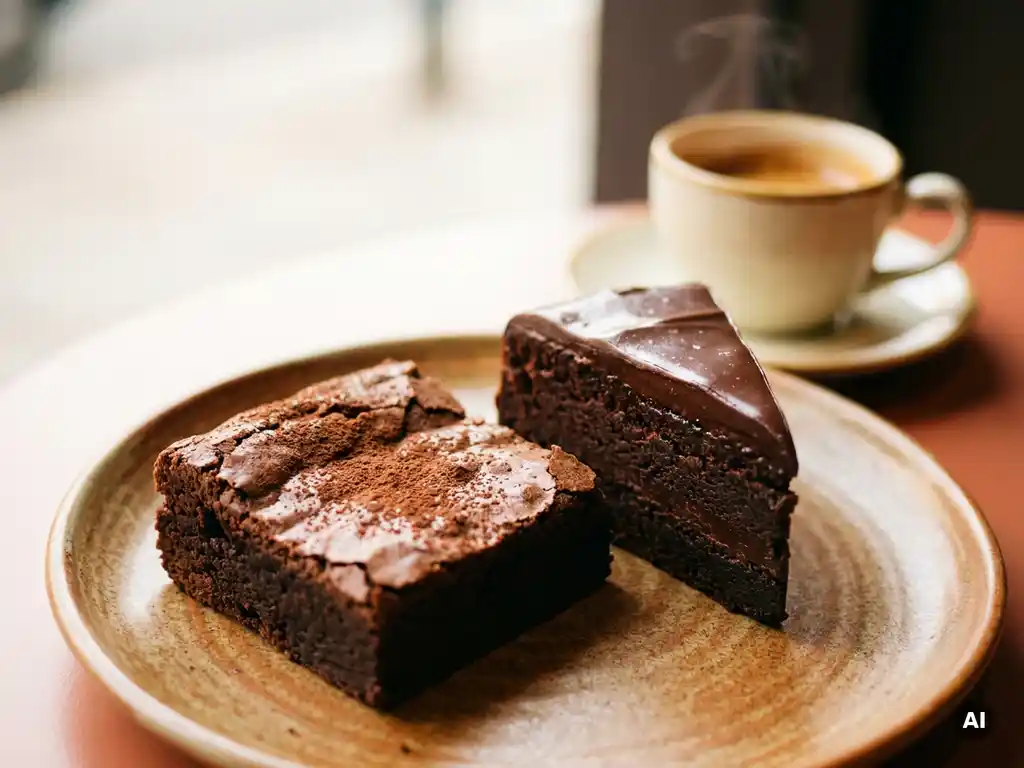
A brownie and a fudge cake are two distinct chocolate desserts that differ primarily in structure and density. A brownie is a dense, squat bar with a chewy or fudgy interior and a slightly crackled top, baked in a flat pan and cut into squares. A fudge cake is a layered or round cake with a softer, more open crumb, typically frosted with ganache or fudge icing. The sections below break down exactly how they differ in texture, recipe, and café context.
What makes a brownie different from a fudge cake in texture?
The key difference in brownie vs fudge cake texture is density. A brownie has a compact, almost solid interior, somewhere between a baked chocolate bar and a slice of cake, with a characteristically chewy bite and a thin, slightly crisp top crust. A fudge cake, by contrast, has a softer, more layered crumb that holds its shape but yields more easily to a fork.
Brownies achieve their signature texture through a high ratio of fat and sugar relative to flour. This low-flour formula limits gluten development, which is what keeps the interior dense rather than springy. The result is a dessert that feels rich and almost molten in the centre, especially when slightly underbaked.
Fudge cake gets its texture from a more balanced cake batter, one that includes leavening agents like baking powder or bicarbonate of soda. These create the lift and airy crumb structure you expect from cake, even though the chocolate flavour and fudge frosting make it taste intensely rich. The moisture level is also higher, giving fudge cake a softer mouthfeel that differs noticeably from the chew of a brownie.
How are brownie and fudge cake recipes structurally different?
The structural difference between brownie and fudge cake recipes comes down to the ratio of fat to flour and the presence of leavening agents. Brownies use very little flour and no raising agents, producing a flat, dense bake. Fudge cakes use a standard cake ratio with leavening included, creating a risen, layered structure that is then finished with a rich fudge-style frosting or filling.
In a classic brownie recipe, the core ingredients are butter, sugar, eggs, cocoa or melted chocolate, and just enough flour to bind everything together. Some recipes include no flour at all, relying entirely on eggs for structure. The mixing method also matters: brownies are typically stirred rather than beaten, deliberately avoiding the aeration that produces a light crumb.
A fudge cake recipe follows conventional cake-making principles. Butter and sugar are creamed together to incorporate air, eggs are added gradually, and flour is folded in with cocoa powder. The batter rises in the oven to create distinct layers, which are then sandwiched and coated with a ganache, chocolate buttercream, or fudge icing. The “fudge” in fudge cake refers almost entirely to the frosting, not the sponge itself.
Why do cafés serve both brownies and fudge cake on the menu?
Cafés serve both brownies and fudge cake because they appeal to different eating occasions and customer preferences. A brownie is a handheld, single-portion treat that is easy to grab alongside a coffee. A fudge cake is a plated dessert that signals indulgence and is better suited to a longer sit-down visit. Together, they cover a wider range of customer needs without overlap.
From an operational standpoint, brownies are practical for café kitchens. They bake in a single tray, require no assembly, and hold well at room temperature for several days without losing quality. This makes them ideal for display cases and high-turnover service environments.
Fudge cake, on the other hand, anchors the dessert menu as a premium offering. A generous slice of fudge cake signals that a café takes its food seriously, and it tends to attract customers who are making a deliberate choice to treat themselves rather than just grabbing something on the go. Both coffee shop desserts serve a purpose, and a well-run café uses each one strategically.
Which pairs better with coffee: a brownie or a fudge cake?
A brownie generally pairs better with coffee than a fudge cake does. The brownie’s dense, slightly bitter chocolate base complements the acidity and roast notes in espresso-based drinks without competing with them. Its compact texture also means it does not overwhelm the palate between sips. That said, fudge cake pairs beautifully with milkier, sweeter coffee drinks where its richness becomes part of the experience.
With a straight espresso or a flat white, a café brownie is the stronger pairing. The chew and intensity of the brownie mirror the concentration of the coffee, creating a back-and-forth that enhances both. Dark roast coffees in particular find a natural companion in a brownie’s deep cocoa flavour.
Fudge cake works best alongside a latte, a mocha, or a cold brew with milk. The sweetness of the frosting and the softness of the sponge call for a coffee that has its own creamy quality to balance them. If you are exploring specialty coffee alongside your dessert, consider how the roast profile of the bean interacts with the sweetness level of what you are eating: lighter roasts with bright fruit notes can cut through the richness of fudge cake in a surprisingly effective way.
What should you look for in a quality café brownie or fudge cake?
In a quality café brownie, look for a dense, fudgy interior with no dry or cakey crumb, a thin crackled top crust, and a rich chocolate flavour that lingers. A quality fudge cake should have a moist, even sponge with no dry edges, a generous layer of smooth, glossy fudge frosting, and enough structural integrity to hold its shape when sliced.
Signs of a quality brownie
- Fudgy centre: The interior should feel slightly underset rather than fully baked through: this is intentional, not a flaw.
- Crackled top: That thin, papery crust on the surface is a sign the sugar and eggs were properly incorporated.
- Real chocolate flavour: A quality brownie uses good cocoa or real chocolate, not a synthetic flavouring: the taste should be deep and slightly bitter, not just sweet.
- Clean cut edges: Well-made brownies hold their shape when sliced, with no crumbling or falling apart.
Signs of a quality fudge cake
- Moist sponge layers: The cake should not be dry at the edges or crumbly in the centre: moisture is a key indicator of freshness and good technique.
- Smooth, glossy frosting: Fudge icing should be thick and rich without being grainy or overly sweet.
- Even layers: Well-baked fudge cake has consistent sponge layers with an even distribution of filling, not one thick layer and one thin one.
- Served at the right temperature: Fudge cake should be slightly cool but not refrigerator-cold, which dulls the flavour of both the sponge and the frosting.
Whether you are reaching for a café brownie or a slice of fudge cake, the same principle applies: the best versions are made with real ingredients, handled with care, and served fresh. A café that takes its coffee seriously tends to apply the same standard to what sits alongside it in the display case.